North York Moors National Park
The North York Moors is an upland area and national park in North Yorkshire, England.

Whitby Abbey, North York Moors National Park and more: the attractions, the days out and how to plan your visit.
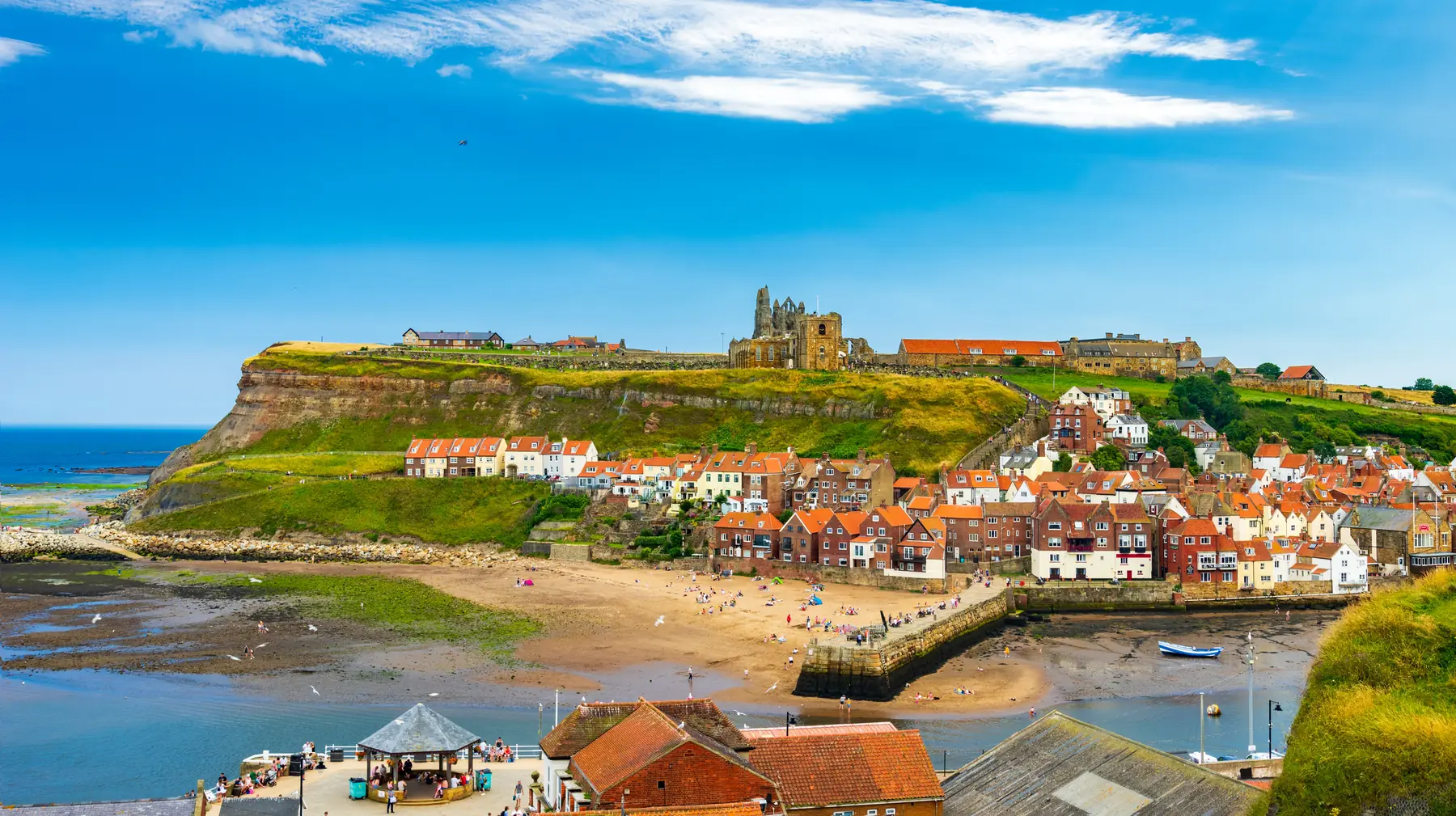
Whitby is a working port and seaside town at the mouth of the River Esk, where the North York Moors run out to the sea. A ruined abbey, a whaling and shipbuilding past, Captain Cook’s apprenticeship and Bram Stoker’s Dracula sit inside a town of 12,600 people at the 2021 census, and the circuit of the main sights is under 3 km of walking. It suits people content to climb: Whitby is built on two cliffs, and the views are all at the top of something.
The Esk divides Whitby, and nearly everything a visitor wants sits clearly on one bank or the other.
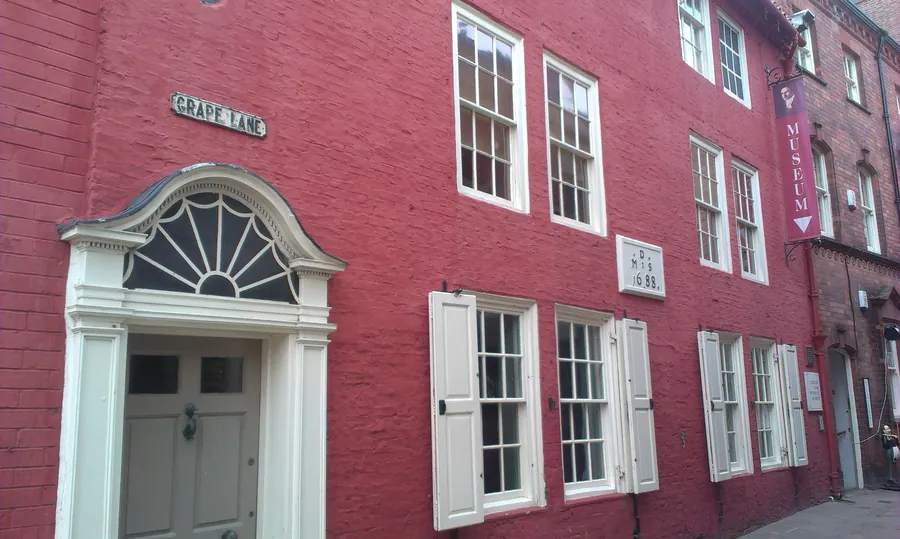
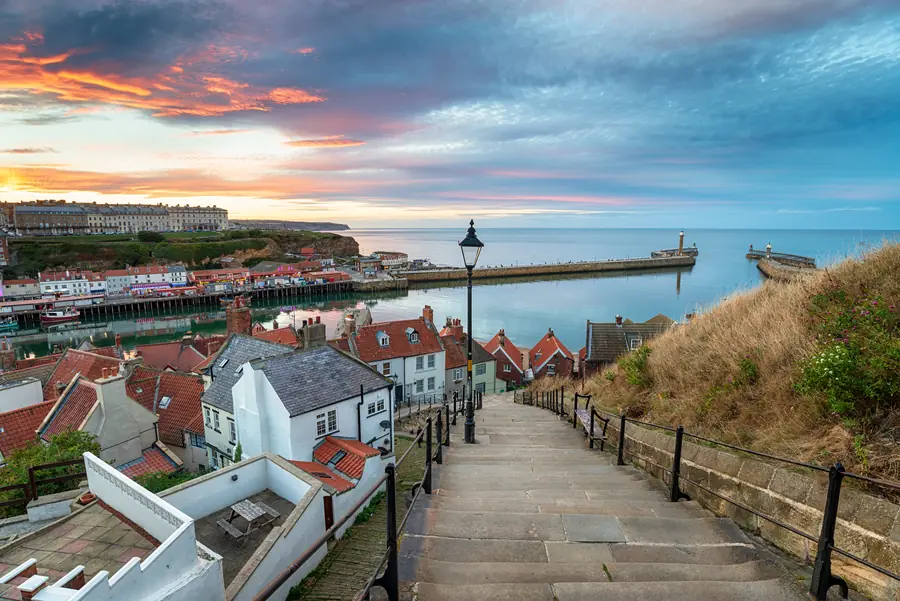
East Cliff is the old town and the headland above it. Church Street runs along the water; at its head the 199 Steps, grade I listed and recorded since at least 1370, climb to St Mary’s Church and its graveyard, where the cliff edge is eroding badly. Whitby Abbey stands beyond the churchyard: a monastery from 657, refounded as a Benedictine house after the Norman Conquest and rebuilt on a larger scale in the 1220s, confiscated under Henry VIII. It is English Heritage and ticketed. The churchyard, the headland, the steps and the view from the top are not. Also east of the river are Tate Hill beach, Fortune’s kipper smokehouse on Henrietta Street, and the Captain Cook Memorial Museum in Grape Lane, the house Cook lodged in as an apprentice from 1746. If the steps are a problem, the abbey is reachable by road via Green Lane and the headland car park, “much easier for people with mobility issues”, as one visitor put it in July 2026.
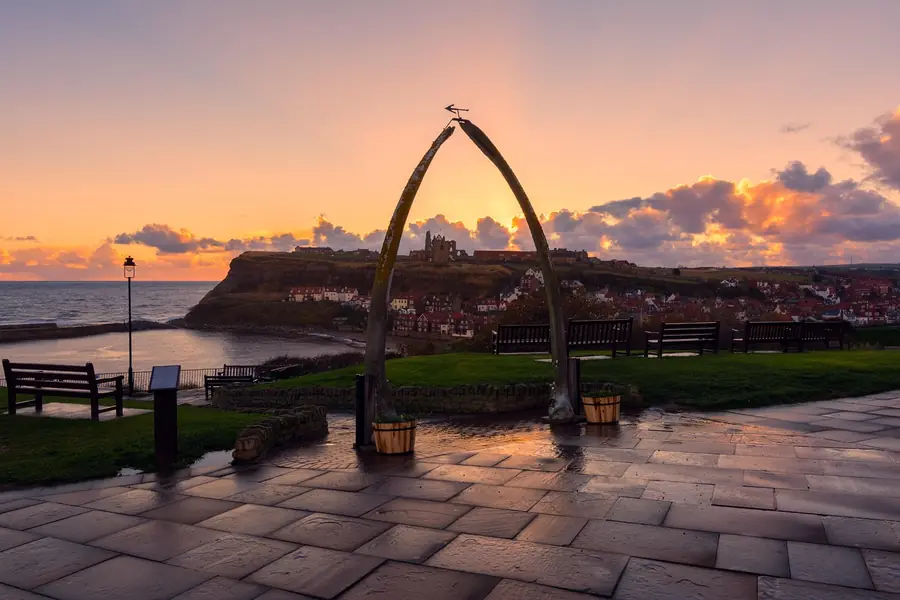
West Cliff is arrival, sand and shops. The railway and bus stations sit together about 200 m from the centre. Pier Road and Haggersgate carry the fish and chip shops out to the West Pier; above them on the clifftop stand the Whalebone Arch and the Cook statue. Whitby Beach is mostly west of the river, sand and shingle running a couple of miles to Sandsend, dogs barred from the busiest sections May to September. Inland and uphill are Pannett Park and Whitby Museum.
Fine summer weekends bring crowds, and it shows: across 160 visitor reviews of the abbey, the steps, the arch and the beach, eleven mention crowds, queues or being packed. A visitor at the abbey in July 2026 advised aiming “to visit in the weekday mornings”; one at the beach that month called it “lively most times but school holidays very busy”; one at the Whalebone Arch in July 2026 would “avoid in the summer as it is very busy and not enjoyable”.
Parking is the pinch point. In summer, day visitors are pushed to the Park and Ride on Guisborough Road. A June 2026 review of the beach was blunt: “Parking is nightmare specifically in mornings.”
The Goth Weekends, around Halloween and in late April, are a separate matter: a visitor in November 2025 could not get into the abbey at all “due to the large crowds and extensive queue during the event”. Two places stay calmer, the West Pier and Pannett Park.
A day covers the town. The walking day published here runs abbey, 199 Steps, coffee on Church Street, beach, Whalebone Arch, lunch and Pannett Park: 2.7 km, roughly 50 minutes on foot spread across the day, plus about 20 minutes back to the headland car park. Reviewers put the abbey anywhere from about 45 minutes to several hours, and Whitby Museum, on reviews from 2022 and 2025, at two hours or more. With small children, the abbey and the steps alone make a short outing from the headland car park. Two nights adds a boat trip, a stretch of the Cleveland Way or the Cinder Track, or a village day. Half a day buys East Cliff and nothing else.
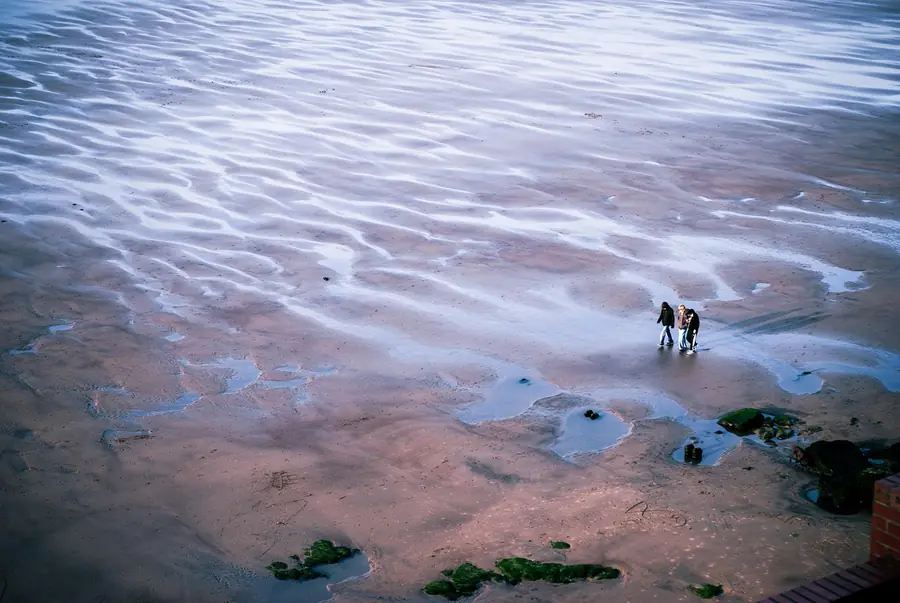
Distances are straight-line from the centre. Ruswarp is 2.1 km up the Esk, Sleights 4.7 km. Sandsend, 4.1 km along the coast, is walkable on the sand when the tide allows: a visitor to Sandsend in June 2023 said “you can walk to Whitby when the tides are right”, and one at Whitby Beach in June 2026 “mistimed and nearly got stuck with high tide”.
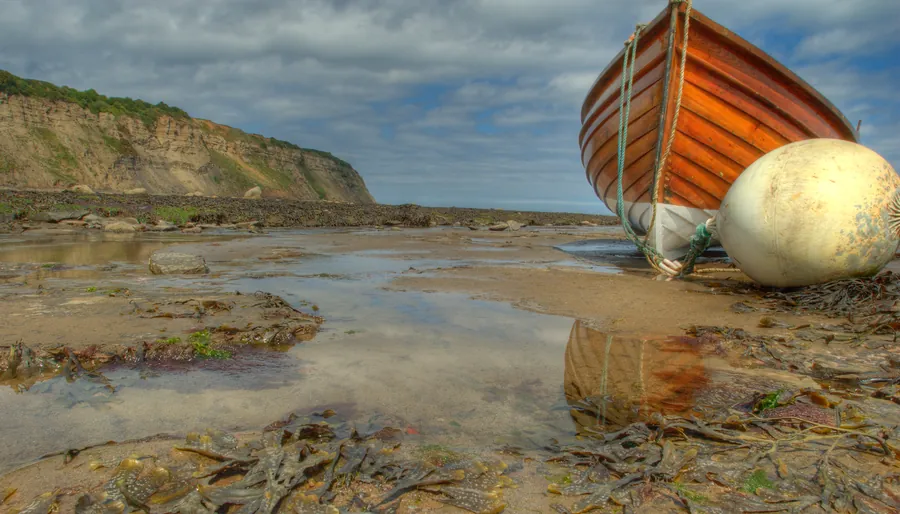
Robin Hood’s Bay is 7.8 km south, a steep street down and a steeper one back, with a beach that a May 2026 visitor said “appears and disappears completely with the tides”. Grosmont, 9.1 km inland, is where the Esk Valley line meets the North Yorkshire Moors Railway steam service from Pickering; Goathland is 11.8 km. Staithes is 13.9 km up the coast, Lealholm 14.0 km up Eskdale. The Cinder Track, the old railway to Scarborough, runs 21.7 miles (34.9 km) in total, crossing the Larpool Viaduct south of the town; it follows the contours and is level going.
The places that define Whitby.
The most-visited sights in and around Whitby.
The North York Moors is an upland area and national park in North Yorkshire, England.

Captain Cook Memorial Museum is a history museum in Whitby, North Yorkshire, England.
The top sights on one map — and a sensible order to see them in.
Want live prices and dates? GetYourGuide's booking widget shows them, and sets their cookies in your browser when it loads.
The five-day forecast for Whitby, updated through the day.
Wet days ahead? Ideas for Whitby in the rain →
Forecast data from MET Norway (CC BY 4.0), summarised by day.
Five trains wind through the moors daily from Middlesbrough, taking 90 min via Nunthorpe, Great Ayton, Castleton Moor and Grosmont. Some start from Newcastle or Carlisle. There's a staffed ticket office and machines; no toilets or waiting room. There is step-free access to both platforms.
Coastliner 840 runs twice a day from Malton, taking 80 min via Pickering and Goathland. From Leeds or York take the hourly 843 heading for Scarborough, and change at Malton. Arriva Bus X93 / X94 runs every 30 min along the coast from Scarborough, taking one hour to Whitby. The X94 continues inland via Guisborough to Middlesbrough.
From Scarborough and East Yorkshire, follow A171 along the coast. From Teesside and the North East, either take A171 or the slower coastal A174. The roads to Whitby across the moors are scenic, but have sharp bends and steep gradients. In winter they are treacherous and may be closed. One popular route from the south is A64 past York to Malton then A169 north through Pickering and over the North York Moors.
Written from what we found on the ground.
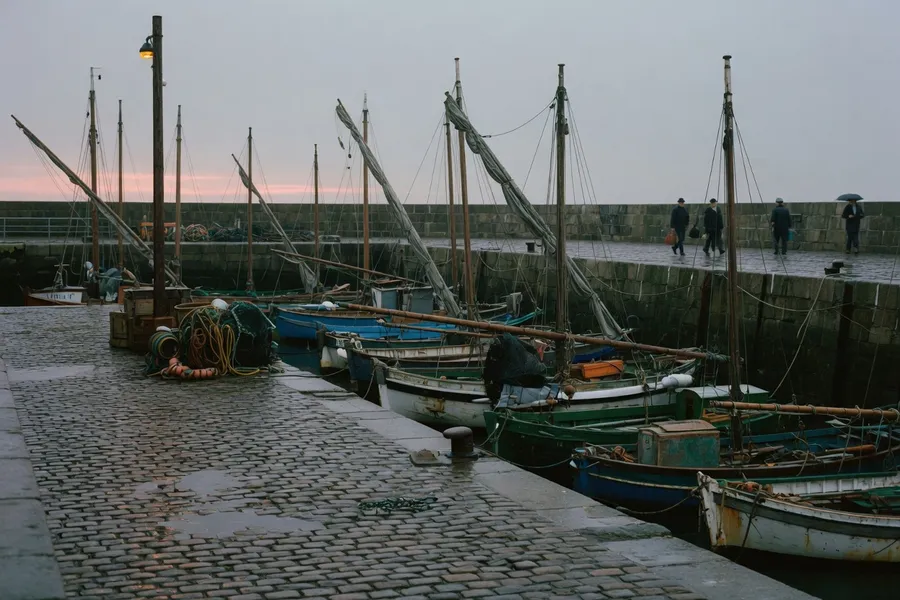 Captain Cook's Whitby Where to find Captain Cook in Whitby: the apprentice house on Grape Lane with its real opening hours and prices, the West Cliff statue, and the two Endeavours — the one you can sail and the one tied up in the harbour. Read the guide →
 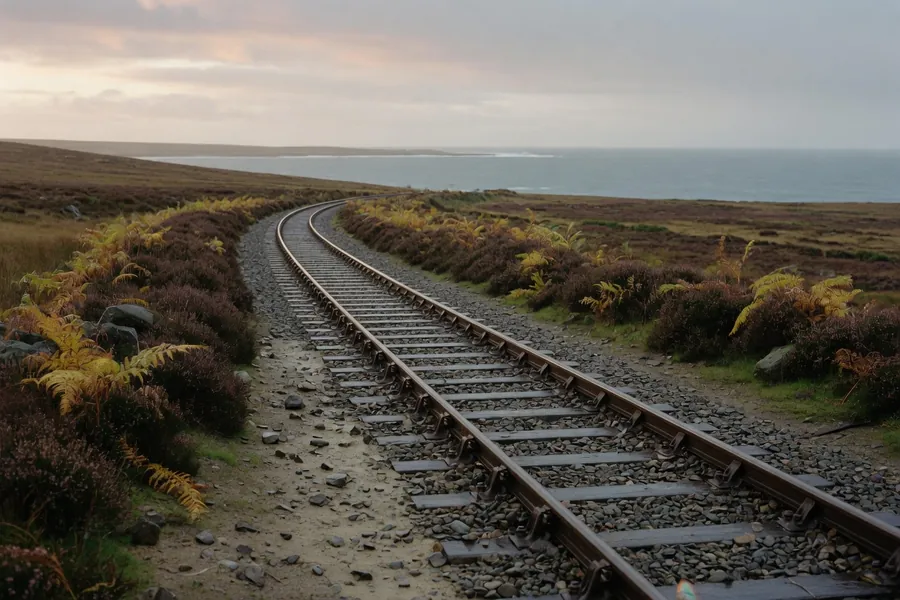 Whitby without a car How to reach Whitby without a car: the Esk Valley line, the X93/X94 coastal bus, the Coastliner from York and Leeds, whether the steam railway reaches town, and how much you can do on foot. Read the guide →
 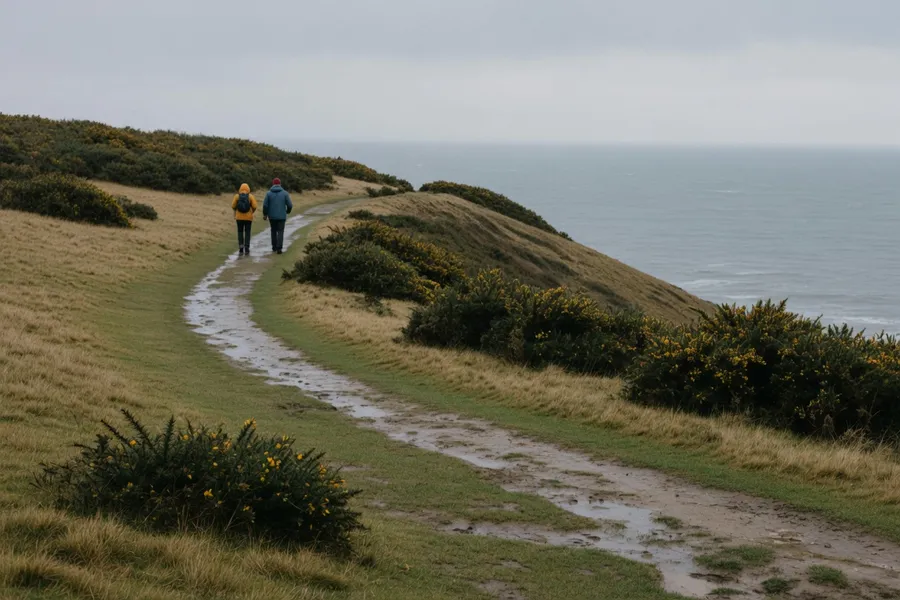 Walks around Whitby Walks around Whitby: the Cleveland Way cliff path to Robin Hood's Bay and Sandsend, the old-railway Cinder Track, the distances and surfaces that matter, and the X93 bus back. Read the guide →
  Where to eat in Whitby Where to eat in Whitby: the two famous fish-and-chip queues and how to beat them, the quieter harbourside and café options, what actually takes a booking, and where to eat further out. Read the guide →